Septic Inspections
What is involved in a septic inspection?
- Records review: The inspector checks permits, the system’s age and design, tank size, and pumping and repair history. They may also ask about household size and water use.
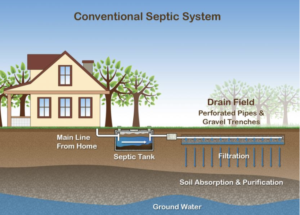
- Locating the components: They find the tank, distribution box, and drain field, and may need to dig to reach buried lids.
- Plumbing and flow check: They run water through the house to confirm it reaches the tank properly and look for slow drains or backups.
- Tank inspection: The lids are opened to measure sludge and scum levels. The inspector also checks the tank for cracks or leaks, looks at the baffles or tees, and checks the liquid level. The tank is often pumped so its interior can be seen clearly.
- Drain field evaluation: They look for soggy ground, odors, sewage on the surface, or unusually lush grass. They may also probe the soil, check inspection ports, or do a hydraulic load test.
- Mechanical checks (if applicable): Pumps, alarms, floats, filters, and electrical parts are tested. Aerobic systems also get a check of their aerators and controls.
- Written report: This covers the system’s condition, any defects, and recommended repairs or maintenance.